Key Insights:
Throughout December, Kremlin-aligned media in Lithuania intensified efforts to discredit the national government, mock democratic activism, and undermine public confidence in institutional decision-making. Malign actors exploited the biggest in years civic protests, security policies, and political transitions to portray Lithuania as chaotic, over-militarized, and disconnected from ordinary citizens. Among the most amplified topics throughout December were the following:
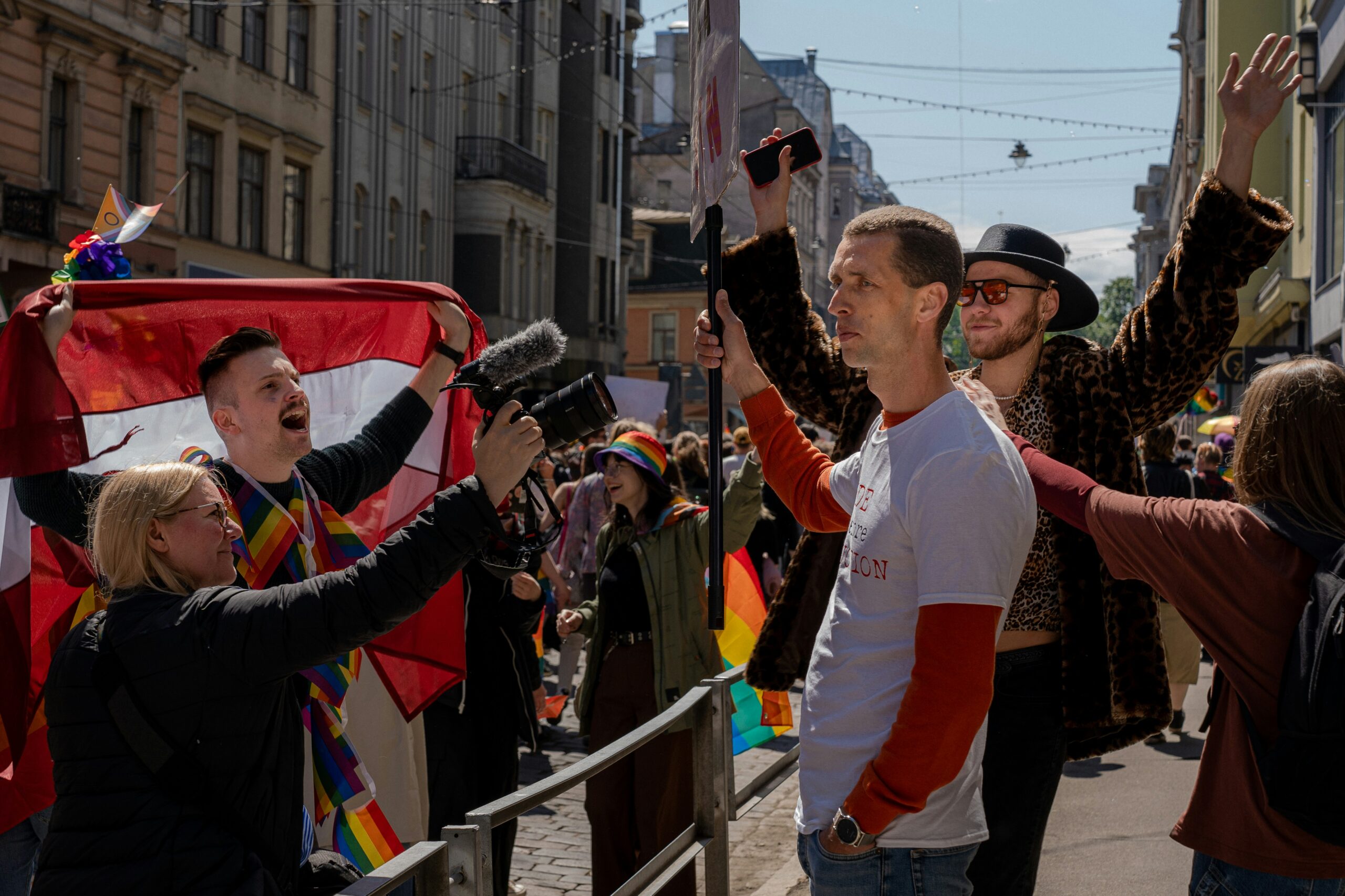
- The largest LRT-related protests yet, held December 16–18, drew significant attention. Kremlin-aligned media framed the demonstrations – organized by journalists, cultural figures, and civic activists opposing rapid leadership changes at the national broadcaster – as exaggerated, theatrical, and symptomatic of elite overreach. Fires lit at Vilnius’ Nepriklausomybės Square were highlighted to emphasize disorder, with commentators sarcastically noting that “so many people were gathered instead of living their normal lives, working, or attending to daily responsibilities.” Anti-government messaging ridiculed democratic activism, portraying civic engagement as disconnected from the everyday concerns of ordinary citizens.
- Security issues were also weaponized for absolute ridicule. The planned construction of the Kapčiamiestis military polygon was described as controversial and absurd, with citizens opposing the facility accused of being influenced by “Kremlin narratives.” Kremlin-aligned media caricatured President Gitanas Nausėda and government officials with exaggerated descriptors referencing corruption, past Soviet affiliations, support for Ukrainian soldiers, and controversial domestic policies. The polygon and anti-Russian deterrence were portrayed as theatrical, overblown, and disconnected from ordinary citizens, suggesting they were forced to endure unnecessary measures imposed by an elite.
- Sanctions against Russia and Belarus were repeatedly ridiculed, framed as ineffective, self-defeating, and imposed against the will of the public. Kremlin-aligned commentary claimed that Lithuania is trapped in a cycle of “sanctions, confrontation, and moralizing,” while portraying domestic elites and Western partners as driving pointless policies.
- Parallel coverage targeted Lithuanian organizations combating disinformation, highlighting minor errors and portraying their efforts as worthless. Kremlin-aligned outlets emphasized that attempts to halt or counter Kremlin messaging were failing and overblown, reinforcing narratives that Lithuania’s media and civic institutions are elite-driven, ineffective, and performative.
- Defense and security measures, including increased air force capabilities introduced after repeated Belarusian balloon incidents, were mocked as excessive and even comical. Officials were derided for “seeing threats everywhere,” and expenditures were framed as wasteful overreactions, reinforcing narratives that Lithuanian security policy is driven by paranoia rather than genuine national interests.
Taken together, Kremlin-aligned media amplified long-standing themes in December 2025: democratic activism is theatrical, independent media and civic organizations are elite-driven and performative, military initiatives are exaggerated, and sanctions and defense policies are portrayed as unnecessary and disconnected from ordinary citizens’ needs. Coverage sought to portray Lithuania as politically unstable, socially divided, and overly focused on external threats, while subtly questioning the legitimacy and effectiveness of both the government and civic institutions.
Overview of the findings:
- Throughout December, Kremlin-aligned media in Lithuania increasingly framed anti-government messaging as the central national issue, portraying the political elite as corrupt, ineffectual, and disconnected from ordinary citizens. Coverage repeatedly emphasised that LRT protests, the Kapčiamiestis polygon, and other developments were symptomatic of a broader crisis in governance, suggesting that the government was not only failing to respond to public concerns but actively manipulating political and social life for its own interests. Malign actors consistently highlighted perceived overreach, inefficiency, and elite self-interest as evidence that Lithuanian democracy itself was under threat.
- The narrative escalation in December was particularly evident in how the outlets framed civic activism and institutional responses. LRT protests from December 16–18 were presented not merely as isolated demonstrations but as a reflection of widespread governmental mismanagement. Malign actors used irony and exaggeration to suggest that citizens were being forced into “performative activism” while their everyday lives were disrupted, presenting the government as a self-serving elite ignoring ordinary needs. Similarly, anti-disinformation organizations were depicted as futile enforcers of state orthodoxy, with their work repeatedly mocked as “overblown” and “elite-driven,” reinforcing the message that efforts to counter Kremlin-aligned messaging were both ineffective and illegitimate.
- The Kapčiamiestis military polygon became another vehicle to intensify anti-government narratives. Coverage framed the facility as highly controversial and unnecessary, with citizens opposed to its construction portrayed as being silenced or accused of following “Kremlin narratives.” Government officials, including President Gitanas Nausėda, were caricatured with extreme exaggeration, linking them to corruption, Soviet-era affiliations, and controversial domestic policies. Anti-Russian deterrence measures were ridiculed as overblown and performative, emphasizing the gap between official priorities and ordinary citizens’ concerns.
- The focus on anti-government narratives was not isolated; it was part of a year-long trend in 2025 where Kremlin-aligned media consistently amplified stories portraying Lithuanian authorities as incompetent, corrupt, and overly reliant on Western influence. By December, this messaging had reached its peak, integrating multiple storylines—from civic protests and security measures to media oversight and sanctions—into a unified discourse of elite failure and systemic dysfunction.
- Overall, December coverage underscored that the anti-government narrative remained the dominant Kremlin-aligned theme throughout the year, intensifying. Through irony, exaggeration, and repeated framing of public institutions as disconnected from citizens, these outlets sought to weaken trust in Lithuania’s government, portray civic engagement as performative, and consolidate a broader perception of political instability and societal discontent.