Key Insights:
Throughout October, Kremlin-aligned media in Lithuania intensified efforts to discredit the government, undermine trust in state institutions, and portray the country as politically unstable and socially divided. Malign actors consistently exploited domestic political developments, security incidents, and cultural debates to advance narratives of elite mismanagement and public discontent. The most engaged and widely circulated storylines throughout the month included:
- Resignation of Defence Minister Dovilė Šakalienė
The resignation of Defence Minister Dovilė Šakalienė became a focal point for anti-government narratives. Kremlin-aligned outlets framed the event as evidence of deep-seated corruption and intrigue within the Lithuanian government, circulating headlines such as “What really happened behind the scenes?” and “What games did the minister play?” Personal attacks emphasized alleged self-interest, suggesting Šakalienė’s departure was motivated by financial gain rather than public service. This coverage aimed to portray Lithuania’s leadership as opportunistic, untrustworthy, and focused on personal enrichment rather than national security.
- Belarusian border and airspace incidents
Air balloon incursions temporarily disrupting Lithuanian airports were weaponized to question the government’s competence and foreign policy approach. Commentators rhetorically asked, “Why does Lithuania continue to choose confrontation with its neighbors?” framing the leadership as deliberately provoking conflict with Belarus. Malign actors used these incidents to depict Lithuania as hysterical, over-militarized, and disconnected from citizens’ daily concerns.
- Controversy over support for Ukraine
Kremlin-aligned media continued focusing on Lithuania’s support for Ukraine, particularly the ongoing display of Ukrainian flags in the Seimas chamber. Reports amplified public debate and framed the government’s actions as excessive, suggesting that Lithuania prioritized foreign interests over domestic welfare. Popular narratives highlighted claims such as “Seimas hoists foreign flags while citizens carry beggars’ bags,” and praised public figures like Ignas Vėgėlė for questioning these policies. The overarching message positioned Lithuania’s leadership as out of touch and excessively aligned with Western geopolitical agendas.
- Statements by Remigijus Žemaitaitis and alternative political voices
MP Remigijus Žemaitaitis received extensive coverage after controversial remarks questioning state officials’ actions and alleged “state coups.” Kremlin-aligned outlets framed him as a pragmatic alternative, highlighting his advocacy for cooperation with Belarus and portraying him as a rare voice of common sense. Coverage of his posts aimed to normalize engagement with authoritarian regimes and cast doubt on the government’s foreign policy decisions.
- Cultural and civic disputes
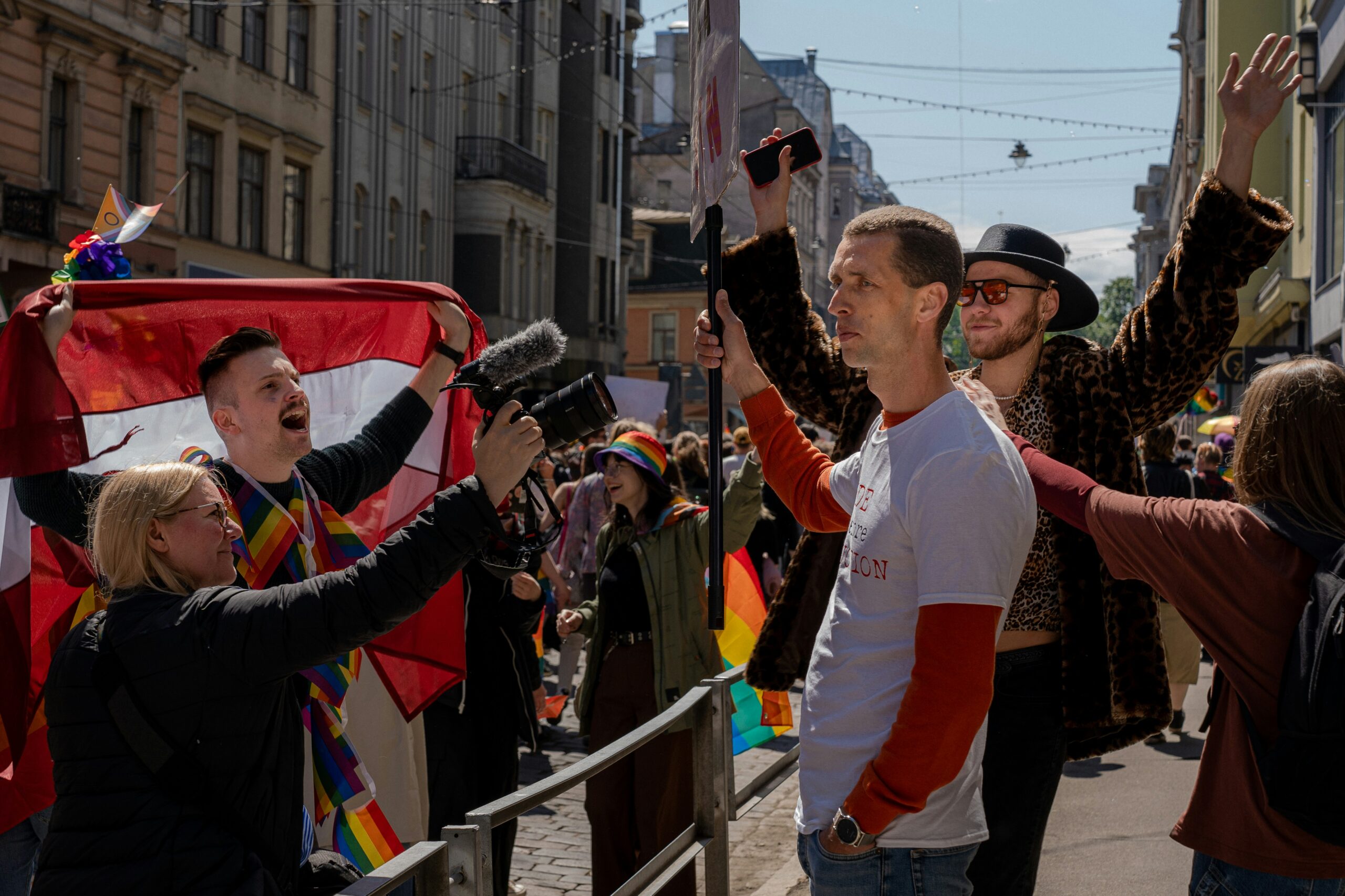
The resignation of Culture Minister Ignas Adomavičius, following nationwide protests organized by cultural and civil society groups, was leveraged to delegitimize democratic activism. Kremlin-aligned media framed protests as “anti-state” actions driven by a disconnected cultural elite, portraying demonstrators as undermining national unity. Key figures in the protests, such as Andrius Tapinas, were mocked and equated with destabilizing movements abroad, including Ukraine’s Maidan, to reinforce a narrative that civic engagement was irrational, elite-driven, and a threat to stability.
- Sviatlana Tsikhanouskaya’s state protection
Coverage also scrutinized Lithuania’s provision of state security to Belarusian opposition leader Sviatlana Tsikhanouskaya. Kremlin-aligned outlets questioned the financial rationale and framed this protection as an example of the government prioritizing foreign agendas over domestic needs, reinforcing broader narratives of mismanagement and elite detachment.
Throughout October, Kremlin-aligned media consistently depicted Lithuania as a country governed by self-serving, incompetent elites and plagued by political instability. By emphasizing resignations, border incidents, cultural disputes, and support for Ukraine, malign actors sought to erode public confidence in democratic institutions, portray civic engagement as theatrical and elite-driven, and cast the government as excessively aligned with Western interests. These narratives served to amplify societal distrust, polarize public opinion, and frame Lithuania as a nation in permanent crisis.
Overview of the findings:
Throughout October, Kremlin-aligned media in Lithuania increasingly framed anti-government and anti-Ukrainian narratives as central national issues. Coverage repeatedly emphasized that political developments, resignations, protests, and civic actions were symptomatic of broader governmental mismanagement and elite self-interest. Malign actors consistently highlighted perceived overreach, inefficiency, and prioritization of foreign causes as evidence that Lithuanian democracy and governance were disconnected from ordinary citizens.
- The escalation of anti-government messaging was particularly evident in the framing of resignations, protests, and policy debates. The resignation of Defence Minister Dovilė Šakalienė was portrayed as a result of hidden corruption and internal intrigue, suggesting that decisions are driven by personal or political gain rather than public interest. Protests against Culture Minister Ignas Adomavičius were framed as elite-driven and destabilizing, with participants mocked as agents of disruption rather than legitimate civic actors. Andrius Tapinas’ involvement was similarly ridiculed, casting protests as performative and detached from everyday life.
- Anti-Ukrainian narratives were a consistent theme. Coverage of Ukrainian flags in the Seimas, along with criticism from figures like Ignas Vėgėlė, portrayed Lithuania’s support for Ukraine as excessive and symbolic, disconnected from citizens’ needs. Politicians advocating closer ties with Belarus, including Remigijus Žemaitaitis, were amplified as voices of “common sense,” while officials promoting support for Ukraine were portrayed as prioritizing foreign agendas over domestic welfare.
- Smaller developments, such as Eduardas Vaitkus’ visit to Belarus and security measures for opposition leader Sviatlana Tsikhanouskaya, were incorporated into broader narratives portraying the government as authoritarian, misprioritizing resources, and punishing dissent. Coverage suggested that elite decisions serve political theater and foreign interests rather than ordinary citizens, reinforcing a sense of disconnect between the government and the public.
Overall, October coverage shows that Kremlin-aligned media focused on framing events and actors to escalate narratives of elite failure, government overreach, and anti-Ukrainian sentiment. By emphasizing manipulation, performativity, and misplaced priorities, these outlets reinforced long-standing themes of political dysfunction, societal instability, and distrust in Lithuanian institutions.